At home
Parents and carers. When homework stalls on a word rather than a calculation, look it up together. You do not need to remember the maths yourself — the explanation is written for both of you.
Free · Open · No sign-in
Word problems are often hard for a reason that has nothing to do with the maths. They are full of words like denominator, perimeter and regroup. This tool explains all 267 of those words, from Kindergarten to Grade 5, in plain language a child can read on their own.
Works on a phone, tablet, laptop, or any browser. Nothing to install.
Note: turn up the volume — sound effects help guide the way.
A child can know how to subtract and still be stuck on a problem, simply because they are not sure what how many are left is asking. The maths was never the barrier. The language was.
So every word here is written twice over. First as a short, plain definition. Then as a small story with a real situation — someone counting grapes, fencing a garden, sharing a pizza — because a word makes far more sense when you can picture it happening.
Every explanation is checked against the Flesch reading scale when the site is built, so the language stays within reach of the age it is written for instead of drifting upward over time.
Every word said simply, in one or two short sentences.
A short story that shows the word doing its job in a real problem.
The mistake children usually make with this word, named plainly.
A button that speaks the word and its meaning for children still building reading fluency.
A 3D map showing how each word sits inside its grade and its topic.
Look up any word across all six grades at once, by name or by meaning.
A small pixel cat keeps your company, offering quiet encouragement and occasional tool tips. It never interrupts, and it can be turned off entirely.
Parents and carers. When homework stalls on a word rather than a calculation, look it up together. You do not need to remember the maths yourself — the explanation is written for both of you.
Teachers. Put it on the board when a new word comes up, or let children look words up themselves during independent work. Words are grouped by grade and topic and cited to their standard — Common Core by default, with the UK National Curriculum and India's NCERT a tap away — so it lines up with what you are already teaching, wherever you teach it.
Tutors and support staff. Check quickly whether a child is stuck on the vocabulary or the method, and use the shared examples as a starting point for talking a problem through.
Children. Big buttons, read-aloud, and a tick beside every word already explored. Nothing to sign up for and no wrong turns to take.
The Math Word Explorer was developed by researchers from the Society and AI Research Group, University of Massachusetts Amherst, and Harvard University.

Principal Research Scientist, Society & AI

Senior Lecturer, University of Massachusetts Amherst
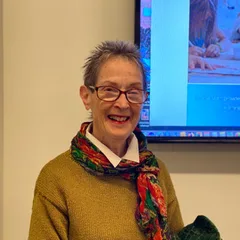
Lecturer, University of Massachusetts Amherst

Graduate Student, Harvard University
Found a confusing word, a broken visual, or have an idea for the Explorer? Tell us — this goes straight to the team.
This site collects no personal information — there is no sign-in, no advertising, and nothing about you or a child is stored on any server. The only things saved are on your own device, in your browser: which words have been opened, and whether sound is on.
We do use Google Analytics to count anonymous website traffic — how many visits the site gets and whether they arrive on a phone, a tablet, or a computer — so we can keep the Explorer fast and comfortable on the devices learners actually use. It reports traffic numbers only: nothing personal, nothing that identifies anyone, and nothing about which words a child reads.
Made by the Usable Math team at the University of Massachusetts Amherst, with the Society & AI research group. Every part of this tool — the word bank, the readability checks and the code — is public, so educators can see exactly how it was built, reuse it, or adapt it for their own district: github.com/sai-educ/math-vocab.
The Math Word Explorer is an Open Educational Resource under the Creative Commons Attribution-NonCommercial 4.0 International licence. You are free to share and adapt it for non-commercial purposes, as long as you give appropriate credit.
The knowledge graph's centre is "Sun" by SebastianSosnowski, licensed under the CC Attribution 4.0 licence.
The Explorer's pixel-cat companion uses a sprite sheet from KINGS-MZ/PixelCat by Imad El Khaider, under the MIT licence. We're grateful to the original artist for the sprite work; the cat's coaching and dialogue in the Explorer were written separately for this project.